What Makes a Tipster Actually Good? (Hint: Not Hot Streaks)
· WildlyPlay
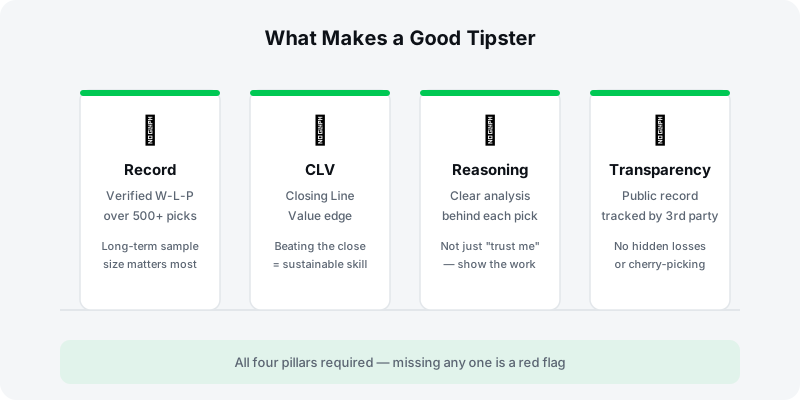
Anyone can go 8-2 over two weeks. Variance alone produces winning streaks all the time. So what does tell you whether someone is actually good?
1. Calibration beats win rate
A good forecaster is calibrated: when they say 60% likely, it happens about 60% of the time. Win rate alone is misleading.
2. Sample size is everything
Ten picks prove nothing. A hundred start to mean something. Be deeply skeptical of anyone showcasing a two-week run.
3. Transparency — the whole record, not the highlights
The biggest red flag is a cherry-picked record. A trustworthy tipster shows the complete log with timestamps that can't be edited after the result.
WildlyPlay publishes every call and result openly, including the no-plays — the matches we deliberately passed on.
4. Discipline: knowing when not to bet
A tipster who has a "lock" every day isn't disciplined — they're manufacturing content. Real edge is rare.
5. Process over outcome
Judge the process: was the read sound, the probability honest, the price genuinely favourable? Outcomes only become meaningful aggregated over a long, transparent record.
How to apply this to anyone (including us)
Before trusting a tipster, ask:
- Can I see the full record, or just the wins?
- How big is the sample?
- Do they pass on games, or claim daily locks?
- Are stated probabilities calibrated over time?
FAQ
Isn't a high win rate proof a tipster is good? No. Win rate ignores odds and sample size.
Does WildlyPlay guarantee profit? No — and anyone who does is lying. We share transparent analysis for information and entertainment, not financial advice. WildlyPlay — we'd rather be honestly calibrated than loudly confident.
Human-picked, AI-operated. A human chose this play; AI wrote, published and settles it.